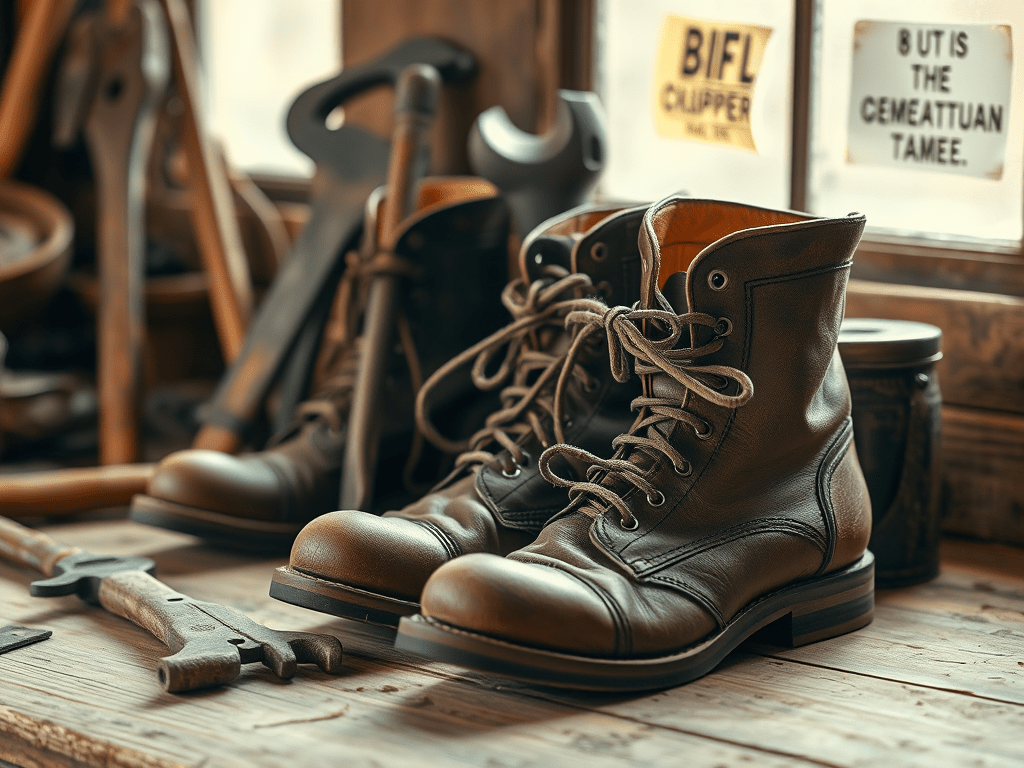
When the thing we buy owns us in return.
In the last fifty years, our relationship with people has been rewired by the rise of the internet, smartphones, and social media. That story has been told often — the dopamine scroll, the collapse of attention spans, the tribal echo chambers. But less talked about, though just as transformative, is how those same forces — combined with plastics, cheap overseas manufacturing, and the endless churn of “new model” upgrades — have changed our relationship with things.
It is one of the constants of the human story to use tools: sharpened sticks for hunting, plows for tilling, hammers for building. Tools have always been extensions of our will — devices that multiply our strength, skill, and time. And for most of history, tools were made to last. They were forged, carved, or stitched by hand. They were passed down, repaired, and cherished.
Then came the word “disposable” entered our lexicon.
It didn’t appear in its modern sense until the mid-20th century, first around 1946, as consumer culture ramped into overdrive. The very existence of the word points to a shift in the imagination: for the first time, people were encouraged to see their possessions not as durable companions, but as short-term conveniences. The television was a prime example — rapidly improving, aggressively marketed, and suddenly “old” after just a few years.
Today, the idea has metastasized. Phones are expected to be replaced every two years. Cars come with trim packages and features designed to look obsolete the moment you drive them off the lot. Fast fashion produces entire wardrobes that will be out of style a year later. Our economy runs on churn, and churn has consequences.
The Consumer Trap
Today happiness is promised at the swipe of a card. The average American believes that one more purchase will “finally” scratch the itch, marketing isn’t just about features anymore — it’s about identity.
“Buy this, and you’ll be seen as successful.”
“Buy this, and you’ll be the outdoorsman you dream of being.”
“Buy this, and your life will finally be in order.”
It’s a subtle form of slavery. We don’t just pay for the product — we pay for the anxiety of keeping up, for the stress of bills, for the restless hunger that never goes away. The object begins to own us: the new truck note that forces you into overtime, the phone upgrade that drains another $40 a month, the endless parade of gadgets that promise freedom while chaining you tighter.
The problem isn’t technology. The problem isn’t even capitalism. The problem is our posture toward possessions: we’ve let them take the throne.
Do we own our possessions — or do they own us?
The BIFL (Buy it for life) movement
Enter a counter-movement: Buy It For Life.
If consumerism is a fast-food diet of disposable junk, BIFL is the return to slow cooking. Quality. Craft. Goods designed to outlast you. On the BIFL subreddit, you’ll find thousands of people comparing boots, knives, cast-iron pans, wool sweaters, and fountain pens. A good portion of them aren’t just buying to save money; they’re buying because they long for connection. They want their kids to inherit their knife. They want their well worn leather jacket to carry stories.
And there is wisdom here. It’s fiscally responsible to buy something once and avoid replacement. It’s culturally restorative to resist disposable culture. It’s humanizing to form a bond with quality tool that will serve you well for years to come.
But BIFL has its own trap.
It can become an obsession, just as consumerist as the thing it tries to replace. Hours lost in rabbit holes of reviews, paralyzed over whether this $300 backpack is truly “the last one I’ll ever need.” Spending $900 on a coffee machine that will outlast your current house. The pursuit of perfection can become its own kind of bondage.
BIFL is better than consumerism. But it still puts the thing at the center.
Dominion vs. Servitude
In Genesis 2:19–20, God brings the animals before Adam to name them. In the ancient world, naming was an act of authority — of dominion. To name something was to declare its place in the world, to order it. Adam was not ruled by the animals; he was called to steward them.
What’s happened in modern culture is a reversal. We don’t name our possessions anymore — they name us. The brand becomes the identity. The car badge, the shoe logo, the phone model: all shorthand for who we are.
This is the great inversion of our age. Instead of exercising dominion over our tools, we allow them to exercise dominion over us. We’ve gone from owners to owned.
The GEAR Method
The solution isn’t to throw away your phone and live like a hermit. The solution is to restore order.
And that’s where the GEAR Method comes in:
Gauge Every Asset’s Role.
Before you buy anything, ask: What role does this play in my life?
- What are my needs? Is this something I will be using every day? Every week? The more you will use something more it might make sense to buy all the quality you can afford.
- Is this a passing fad? New hobby? If you have just picked up biking it might make sense to buy a cheaper bike to start off with. Then in 6 months to a year if you are still riding consistently you know better what type of bike you like, what size you need, and that it wont just sit in the basement collecting dust.
- Budget, how does buying this fit into my long term goals? My families goals? If your budget is tight at the moment then it might make sense to buy a cheaper product for now, on the other hand buying quality is often cheaper in the long run and that tight rope is one only you can walk.
GEAR frees you from both the endless consumer churn and the perfectionist BIFL trap. It puts you back in the driver’s seat. Gauge where each asset fits into YOUR life, buy as much quality as you can afford, care for and maintain your tools religiously, and make sure you are always in the drivers seat, not the other way around.
This method isn’t about frugality or luxury. It’s about clarity. It’s about reasserting dominion over your possessions.
Why GEAR Wins
Consumerism says: Buy more.
BIFL says: Buy the best.
GEAR says: Buy the right thing for the right role.
Consumerism leaves you restless.
BIFL leaves you paralyzed.
GEAR leaves you free.
GEAR respects the hierarchy of your life. It doesn’t treat every purchase as equal. It doesn’t demand perfection where good enough will do. It doesn’t ask you to live like a monk, nor like a slave to upgrades.
The Call to Action
Here’s the challenge: next time you’re about to buy something — anything — pause. Don’t scroll reviews until 2 a.m. Don’t mindlessly swipe your card. Don’t let the ad campaign whisper that your identity depends on it.
Instead, ask one question: What role will this play in my life?
Gauge Every Asset’s Role. Buy accordingly.
Because life isn’t about owning the most. It isn’t about owning the best. It’s about owning what matters — and owning it on your terms.
So gear up. The next chapter of your life doesn’t start with the next model, the next gadget, or the next upgrade. It starts with you taking back ownership.

 Fortis Carry & Co.
Leave a comment